Advance only when the next question is ready.
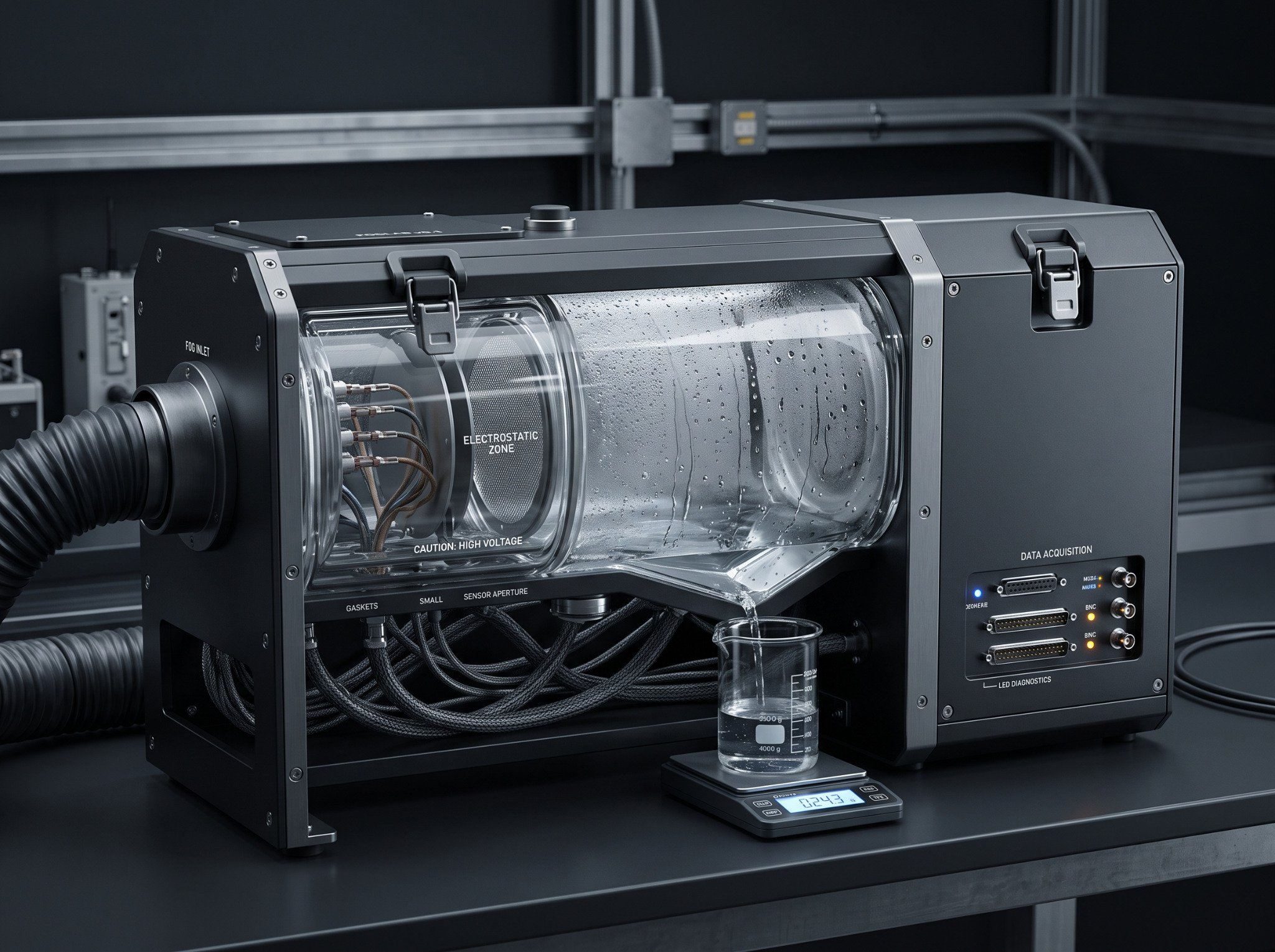
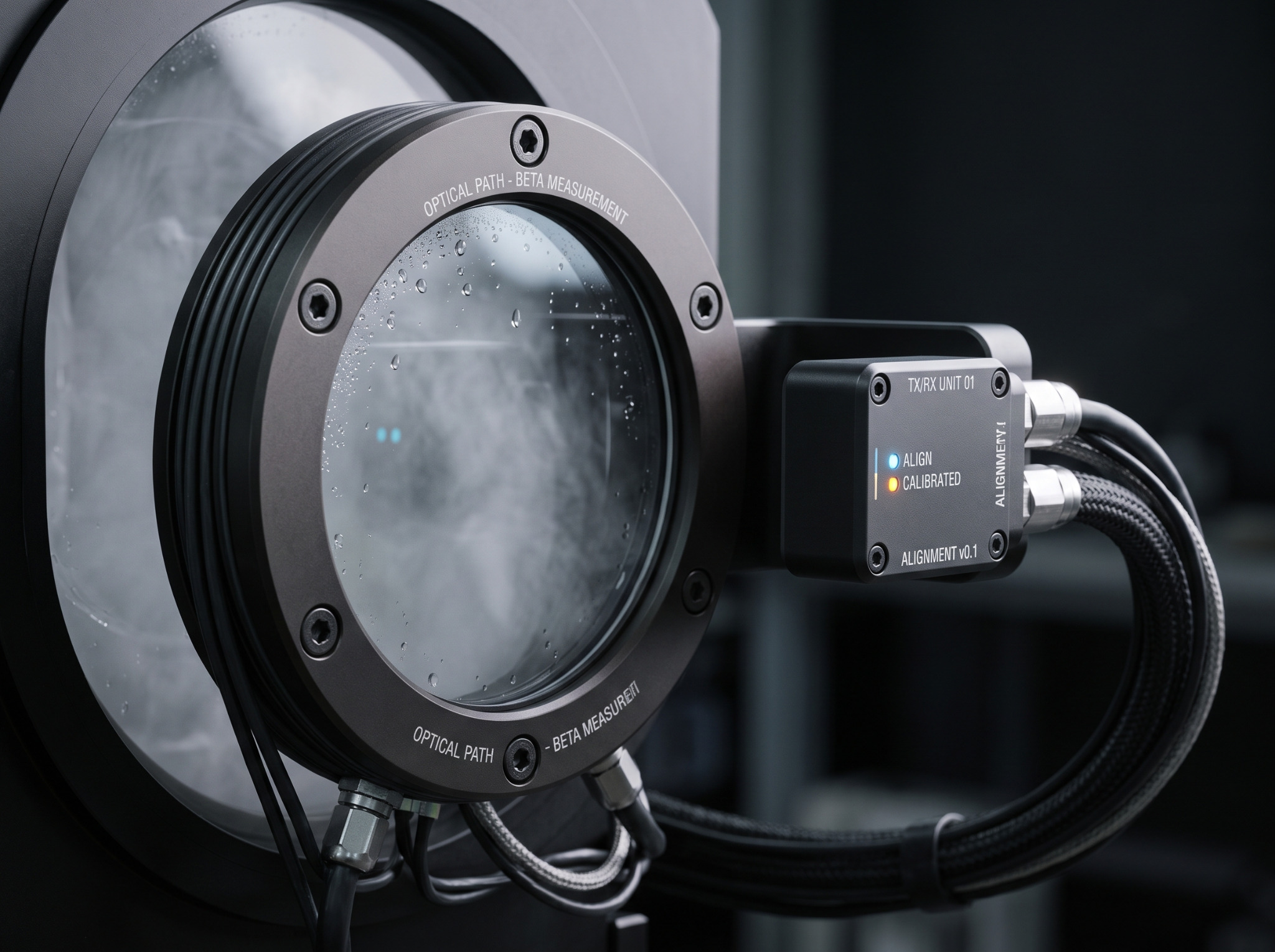
- Qualify the apparatus and measurements. Demonstrate optical validity, stable exposure, reset behavior and the relevant fog regime before evaluating effectiveness.
- Run the bounded discovery stage. The 60-comparison plan screens and refines geometry, polarity, dose and qualified flow speeds, then gathers fresh pilot-day variance.
- Freeze one setting for confirmation. The planned confirmation uses 24–48 independent preparation days, with two matched pairs per day. The final workload depends on the predeclared planning calculation.
- Assess optical, hardware and application gates separately. A useful laboratory optical result does not by itself qualify reliability, an outdoor cleared volume or buyer economics.
- Test the open-boundary hypothesis later. Flow around the collector and the spatial persistence of clearing require a separate experiment.
A result we can interpret
The proposed optical reduction threshold is 20%, assessed with the protocol’s uncertainty and systematic-bias treatment. The planning example assumes a true 35% reduction. These are design choices, not performance achieved by weatherhill.
The complete decision rules, exclusions, fresh-day requirements and sample-size method belong to the versioned protocol. Browser tools illustrate the calculations and do not issue a protocol approval.
Proposed high-voltage work belongs in a professionally supervised, interlocked facility. No construction or energization instructions are provided here.