Why collected water does not prove clearer air
A collector can change the water balance and the optical signal by different amounts. A visibility product has to measure both.
Read the note ↗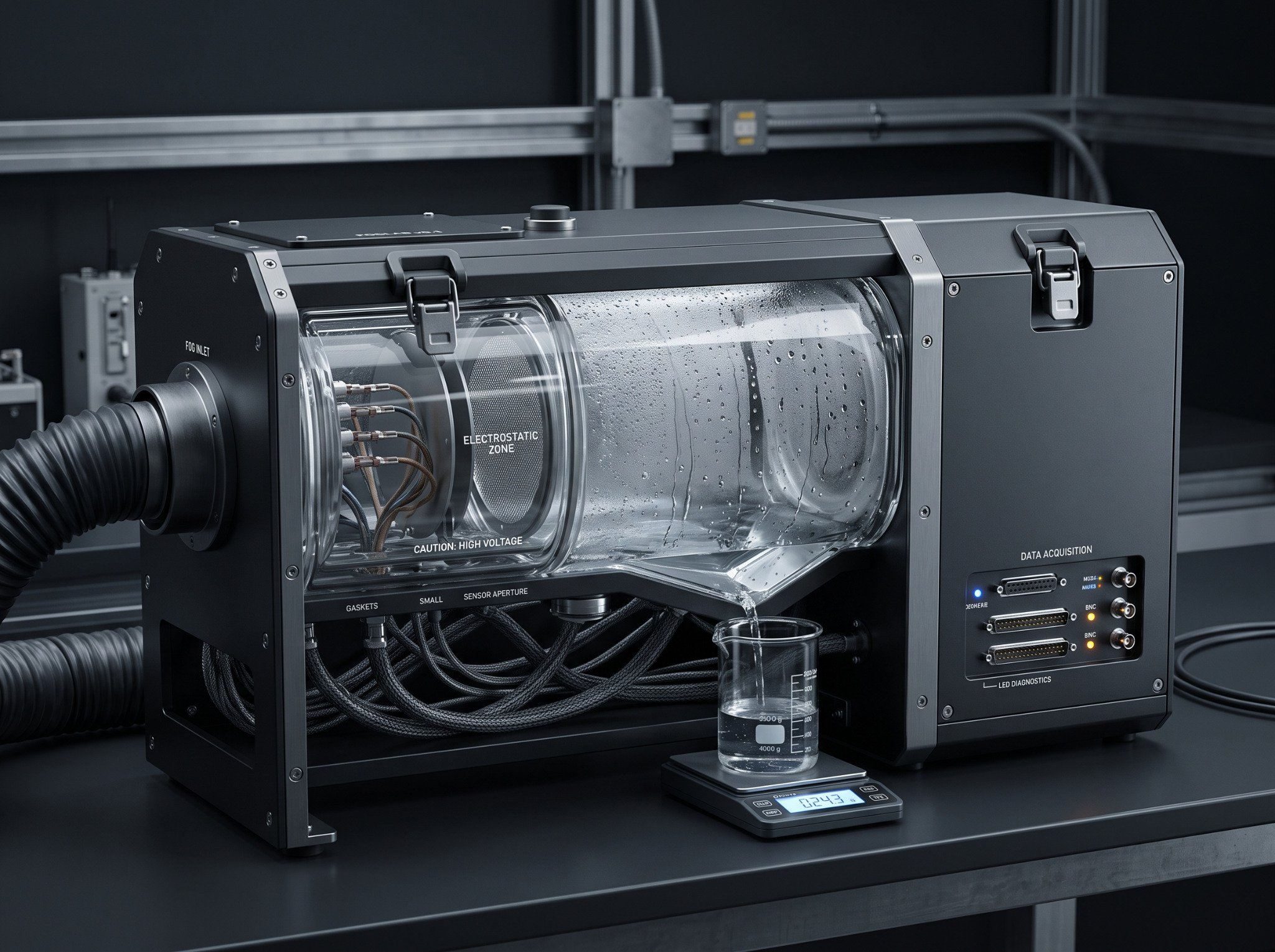
A research home for fog, water and atmospheric electricity. Explore the evidence. Work with the tools. Help build the next experiment.
266 real papers. 15 working tools. One measured first step.
From a single charged droplet to a cloud field. Follow a mechanism, inspect its evidence and find the measurement that would settle the next question.
What is between us and a clear view?
35 papersFIELD 02Can a field help water reach a surface?
18 papersFIELD 03How does charge move through air?
23 papersFIELD 04How much charge changes a droplet?
18 papersFIELD 05When can a rainfall change be attributed?
28 papersFIELD 08Can the measurement carry the claim?
24 papers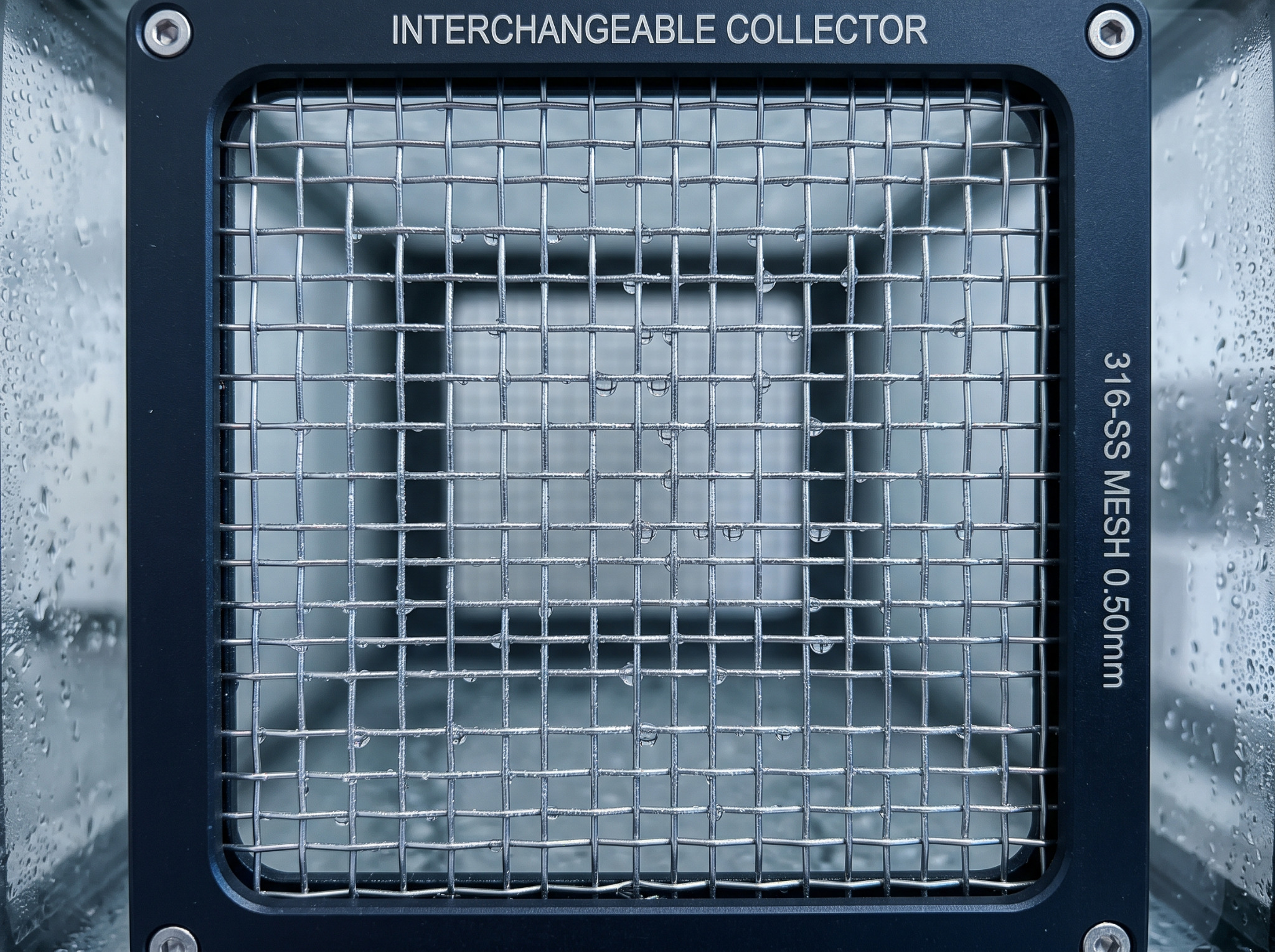
We are developing an instrumented way to test electrostatic fog collection. The first question is precise: does powering a collector reduce optical extinction beyond the identical passive collector?
WX-FOG-001 defines the proposed experiment. Direct optical measurements come first, with droplet size, charge, airflow and whole-system energy alongside them.
Useful calculations, visible assumptions and exportable results. Run them in your browser. Bring your own data to the spectrum and paired-trial tools.
Move the measured transmission along a 10 m optical path. Watch the inferred extinction and 5% optical range change.
A homogeneous attenuation model. Wavelength-specific range unless the WMO spectral requirements are met.
Open the complete tool ↗Compare number, water mass and approximate extinction across wet droplet sizes.
EngineeringFind face velocity and idealized fan input for a supplied area.
EngineeringKeep air throughput, recovered water and electricity in the same ledger.
ElectrostaticsCompare ideal electrical drift and gravitational settling in still air.
ExperimentsAnalyze transit-aligned upstream/downstream means across independent days.
ExperimentsExport a reproducible, balanced C/D order across preparation days.
Short, source-linked notes on the evidence, the corrections and the decisions shaping the first experiment.
A collector can change the water balance and the optical signal by different amounts. A visibility product has to measure both.
Read the note ↗The D/C comparison asks whether electrical operation adds an optical benefit to the same collector under matched conditions.
Read the note ↗The published 38.3 Wh/kg estimate is useful context. Turning it into a product specification requires additional measurements and assumptions.
Read the note ↗A useful result needs a defined quantity, a fair comparison and a record someone else can inspect. That is how a physical possibility becomes an engineering decision.